
Comparison of Clip Mechanisms for Arthritis
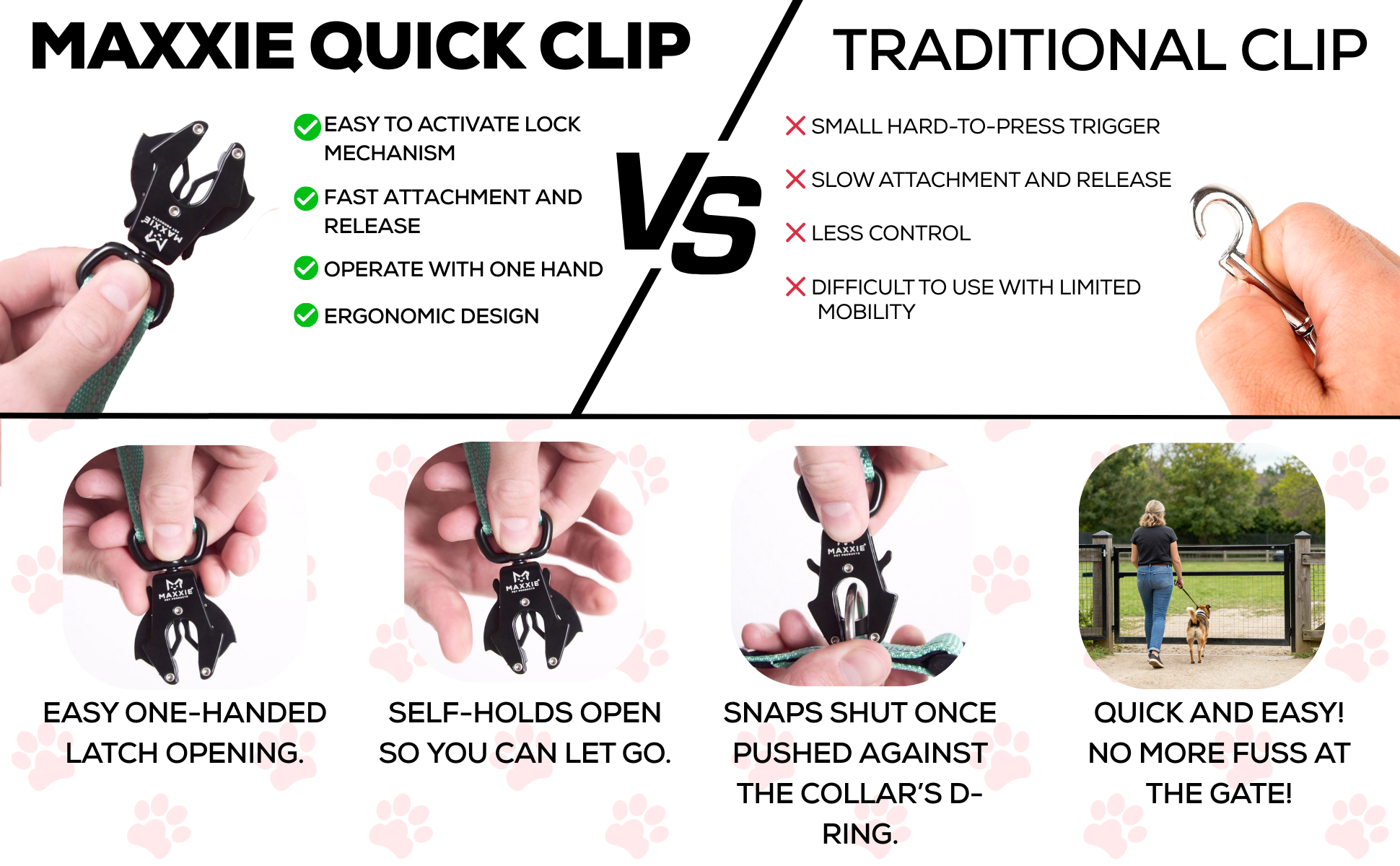
When you have limited hand mobility, the mechanism that connects the lead to the collar is often the most painful part of the walk.
Maxxie Pet Products Quick Clip
The Mechanism: Operates in "stages," meaning you don't have to maintain constant, heavy pressure on a spring to keep it open while trying to hook it onto a collar.
Arthritis Benefit: This eliminates the need for the intense "pinch" strength required by standard clips, making it easier for those with conditions like Parkinson's or rheumatoid arthritis.
Standard Bolt Snaps (The Common Kind)
The Mechanism: A small lever that must be pulled down against an internal spring.
Arthritis Conflict: These are often the hardest to use because they require fine motor skills and significant thumb pressure. They can also become stiff or "gritty" over time, making them even harder to slide.
Magnetic Connectors
The Mechanism: Uses strong magnets to pull the two ends together, which then lock mechanically.
Pros: Excellent for reattaching mid-walk as the magnets do the "finding" for you.
Cons: Some users find the release buttons (often needing a two-sided squeeze) difficult if they have severe thumb pain or inflammation.
Carabiner-Style Clips
The Mechanism: A simple gate that pushes inward. Some are auto-locking, requiring a twist to open.
Pros: Extremely secure and doesn't require a "pull-down" thumb motion.
Cons: Can be bulky and heavy, which may weigh down a smaller dog's neck or cause hand fatigue during a long walk.
Why the Maxxie Dual Handle Matters
Beyond the clip, the dual-handle system on Maxxie leads provides a mechanical advantage that a single handle lacks. By having a traffic handle close to the dog, you can use your entire arm and shoulder to guide the dog in tight spaces. This prevents the common (and painful) habit of wrapping a leash around your hand to "shorten" it, which can compress arthritic finger joints and lead to injury if the dog lunges.